The Evolution of Arcade Games: From Coin-Op Cabinets to Mobile Gaming
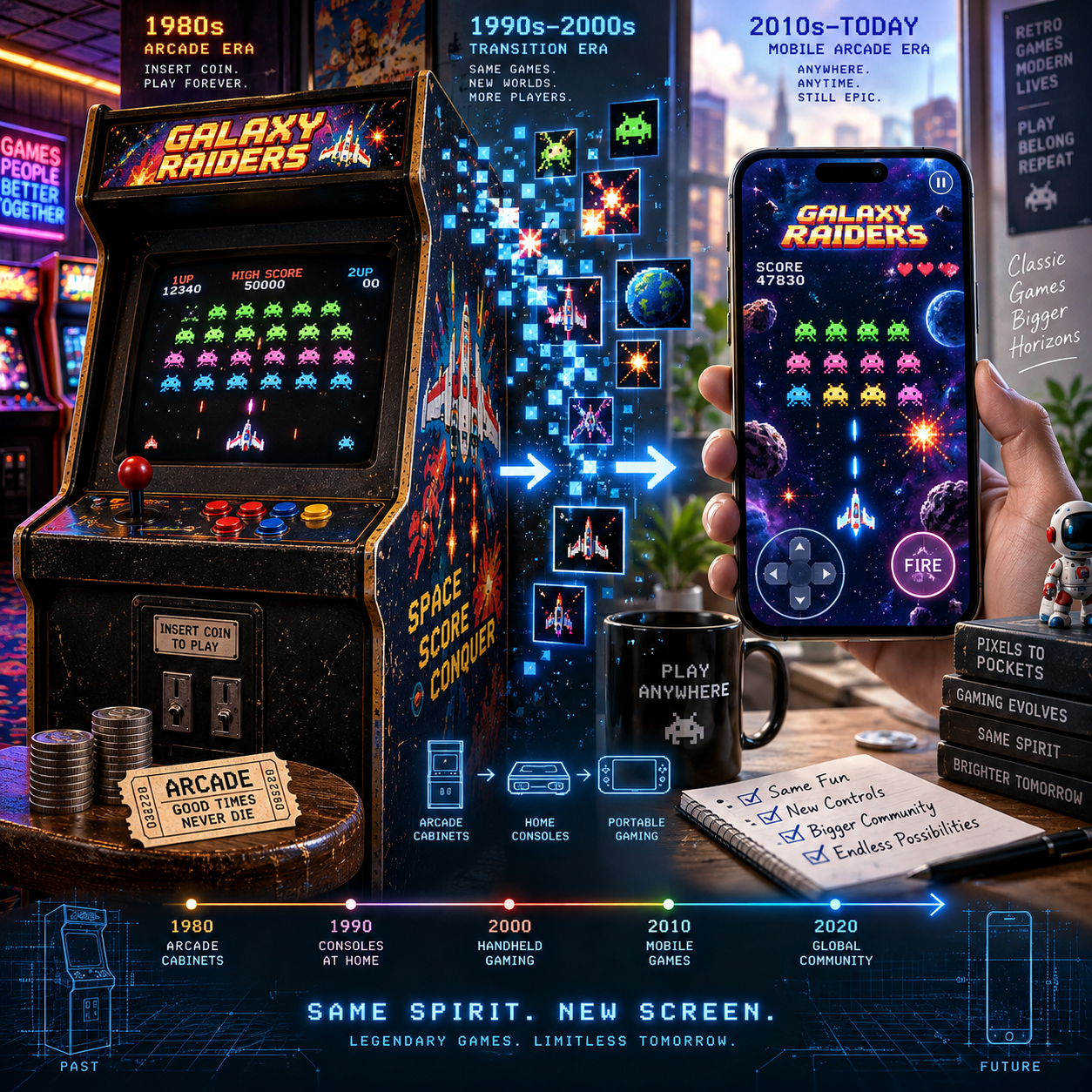
Arcade games evolved by turning technological limits into design strengths. Coin-operated arcade cabinets demanded short, readable, replayable experiences, while modern mobile games adapt those same principles to touchscreen controls, instant access, and free-to-play business models.
What Defined the Original Arcade Experience?
Original arcade games were built around coin-operated cabinets, short sessions, immediate feedback, and competition for a place on the high-score table. Their design had to communicate clearly within seconds because every mistake could cost the player a life, a continue, or another coin.
The cabinet itself shaped the experience. A screen, joystick, physical buttons, speakers, and coin mechanism formed a focused play station. Players stood close to the display, learned the basic controls quickly, and entered the action without installation, tutorials, or lengthy story sequences.
Limited resources encouraged tight pacing. A typical session might last only a few minutes, with players managing a small number of lives and limited continues. This created a simple exchange: the game provided immediate entertainment, while the player supplied attention, skill, and sometimes another coin.
Feedback was physical and audiovisual. Button presses produced an instant response, while sound effects, flashing sprites, animations, and score changes confirmed success or failure. A coin-operated cabinet also made progress visible to an audience, turning private improvement into public competition.
The Core Mechanics That Made Arcade Games Compelling
Arcade games became compelling through compact gameplay loops: act, receive feedback, face greater danger, lose or succeed, and try again. Their famous easy-to-learn, hard-to-master structure made the first moments accessible while giving skilled players reasons to continue practicing.
Many arcade gameplay loops depended on repetition with variation. A player moved, aimed, dodged, matched, raced, or attacked. The system then introduced faster enemies, denser patterns, tighter timing, or more demanding combinations. The rules stayed stable enough to learn, but the pressure increased enough to test mastery.
Difficulty, pattern recognition, and risk
Difficulty often came from readable patterns rather than randomness alone. Players learned enemy movement, level layouts, attack timing, and safe positions. Once a pattern became familiar, the player could replace panic with prediction. That shift from reaction to understanding created a strong sense of improvement.
Risk and reward added another layer. Chasing a bonus, taking a shorter route, or staying in danger for extra points could improve a score, but failure carried a cost. This made high-score systems more than decorative numbers. They gave players a reason to replay familiar content after basic completion no longer felt challenging.
The strongest arcade designs also maintained a clear relationship between input and outcome. When a player failed, the cause usually felt visible: a missed jump, late movement, poor positioning, or an incorrect decision. That clarity encouraged another attempt because the player could identify what to change.
How Technology Changed Arcade Game Design
Technology expanded arcade design from static screens and simple sound into scrolling worlds, richer audiovisual feedback, multiplayer experiences, and specialized physical interfaces. Each advance increased expressive possibility while introducing new demands for clarity and control.
Early hardware supported relatively simple visuals, but pixel art could still communicate character, danger, direction, and reward efficiently. As processing power improved, designers added scrolling environments, layered backgrounds, animated characters, and more complex enemy behavior. The screen became a moving space rather than a single fixed arena.
Sound developed alongside visuals. Short electronic tones became recognizable signals for damage, bonuses, warnings, and completion. Later systems could support music and more varied effects, but the underlying principle remained the same: audiovisual feedback should help players understand the game state, not merely decorate it.
Arcades also became laboratories for specialized controls. Racing games used steering wheels and pedals; flight games introduced yokes or cockpit-like controls; rhythm games used physical panels; and light-gun titles translated aiming into direct gestures. These cabinets offered experiences that ordinary joysticks and buttons could not reproduce easily at home.
Multiplayer cabinets changed the social rhythm of play. Competition could happen through direct matches, cooperative action, or spectatorship. The machine became a shared attraction, although that visibility also raised the pressure on new players who had to learn in public.
From Arcades to Living Rooms
Home consoles and personal computers moved arcade-style games into longer, more private sessions. Players gained ownership or repeated access without paying per attempt, so designers could expand levels, add save systems, and support slower forms of progression.
The transition changed the value of failure. In an arcade, failure often encouraged an immediate restart or another coin. At home, the player could pause, practice, and return later without financial pressure. This made room for passwords, saved games, exploration, inventory, and narratives that unfolded across many hours.
Home hardware also changed the meaning of content. A cabinet needed to attract attention in a public venue, while a console game could build an audience through packaging, recommendations, and long-term ownership. Arcade-inspired mechanics remained common, but they were often combined with role-playing systems, platform exploration, strategy, or story-driven progression.
That shift involved a trade-off. Longer games could offer greater variety and immersion, yet they sometimes diluted the clean feedback and rapid restart rhythm that made arcade play so effective. Many designers continued to preserve the arcade core through score attacks, time trials, boss encounters, responsive controls, and compact challenge stages.
The Rise of Mobile Arcade Games
Mobile arcade games adapt classic arcade principles to touchscreen controls, portrait screens, instant access, and short sessions. They simplify input to fit a phone while preserving fast feedback, repeatable challenges, and quick opportunities to improve.
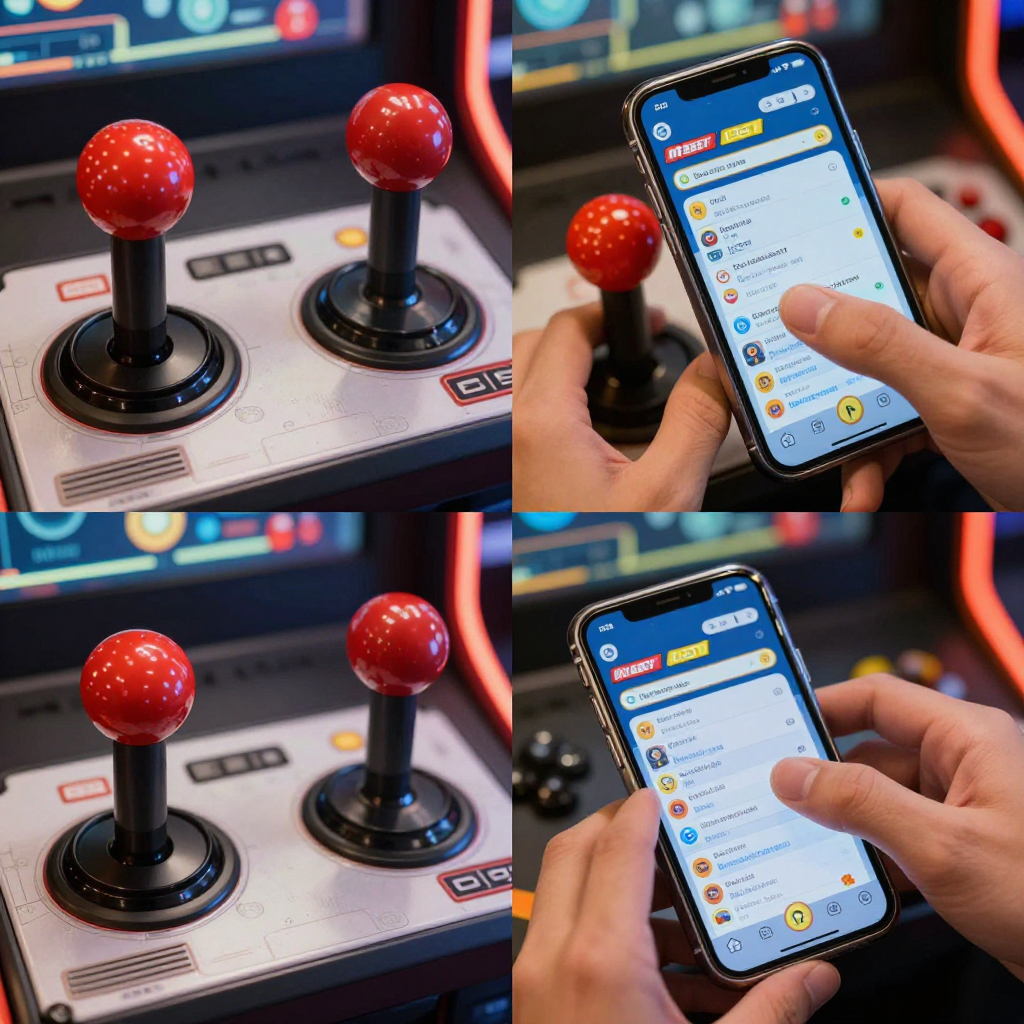
The touchscreen removed the tactile certainty of a joystick and physical buttons. A finger can obscure part of the display, offer less mechanical feedback, and behave differently depending on grip or device size. Designers responded with taps, swipes, virtual buttons, automatic movement, one-touch timing, and gesture-based controls.
Portrait play made one-handed use practical, especially during brief sessions. A mobile game might offer a meaningful challenge in 30 seconds or a few minutes, allowing players to stop between activities. This resembles the short-session structure of the arcade, but access is now nearly continuous rather than limited by a machine or location.
Mobile devices also impose constraints. Battery life, varying screen sizes, notifications, network conditions, and inconsistent performance can interrupt play. Strong mobile design therefore uses large readable targets, clear visual hierarchy, forgiving input windows, and feedback that remains understandable on a small screen.
Classic arcade mechanics survive through adaptation. Endless runners use escalating speed and reflexes. Match games rely on rapid recognition and chain reactions. Bullet-avoidance games use pattern learning. Score attacks, daily challenges, leaderboards, and instant restarts recreate the improvement loop without reproducing the cabinet itself.
Monetization and Engagement Across Eras
Arcade monetization charged for attempts, while mobile free-to-play systems usually monetize time, convenience, customization, advertising, or optional purchases. Both models shape engagement, but they create different pressures around difficulty, progression, and player retention.
In the coin-op era, continues were direct transactions. A difficult section could encourage another play, but excessive punishment risked making the cabinet feel unfair. The business model rewarded immediate excitement and a visible path toward improvement.
Home gaming shifted revenue toward an upfront purchase, with later systems adding downloadable content, expansions, subscriptions, and digital storefronts. The player generally paid for access before experiencing the full game, so perceived completeness and long-term value mattered.
Mobile games often remove the initial price through advertising or in-app purchases. They may use energy systems, cosmetic items, optional boosts, battle passes, or progression shortcuts. These systems can support ongoing content and free access, but they can also interfere with pacing when the design prioritizes retention metrics over satisfying play.
A useful design test is to separate engagement from compulsion. A strong arcade loop brings players back because they understand the challenge and want to improve. A weaker loop may rely on friction, artificial waiting, or unclear rewards. Monetization does not determine quality by itself; the crucial question is whether the business model respects the player’s sense of agency.
What Modern Designers Can Learn from Arcade Games
Modern designers can learn from arcade games by prioritizing clarity, responsive controls, readable feedback, meaningful challenge, and replayability. These principles remain effective across consoles, computers, and mobile devices because they address how players understand and improve at interactive systems.
Five durable design principles
- Make the first action obvious. Players should understand the basic goal and input within seconds.
- Make responses immediate. Animation, sound, haptics, score changes, and movement should confirm what the player did.
- Teach through escalating pressure. Introduce one rule, then test it through speed, combinations, or competing priorities.
- Make failure informative. Players should see why they failed and what skill could prevent the same result.
- Reward mastery without requiring completion. Scores, faster times, cleaner execution, and optional risks give experts room to improve.
The most transferable arcade idea is the quality of the loop, not the presence of a joystick or pixel art. A modern mobile game can use sophisticated graphics and long-term progression while still benefiting from a two-second restart, precise input timing, and a challenge that becomes clearer with practice.
Designers should also respect platform differences. A control scheme that feels excellent on a cabinet may feel awkward on glass, while a touch mechanic may lack the physical drama of a specialized arcade machine. The goal is not to imitate old hardware literally. It is to preserve the relationship between action, feedback, challenge, and mastery that made arcade games endure.
Arcade Games Evolution FAQ
What makes a game arcade-style?
An arcade-style game usually emphasizes immediate action, clear rules, responsive controls, short or repeatable sessions, escalating difficulty, and replayability through skill or score improvement.
Why were arcade games designed around short sessions?
Short sessions suited coin-operated business models and public venues. They also made the rules easy to understand, encouraged quick rematches, and allowed players to improve through repeated attempts.
How did mobile controls change arcade game mechanics?
Touchscreens replaced tactile joysticks and physical buttons with taps, swipes, gestures, virtual controls, and automated movement. Designers often simplified inputs and increased visual clarity to compensate for reduced physical feedback.
Which classic arcade design principles are still used today?
Immediate feedback, readable objectives, escalating challenge, pattern recognition, risk and reward, fast restarts, high-score systems, and easy-to-learn, hard-to-master mechanics remain widely used.
How do arcade monetization models compare with mobile free-to-play systems?
Arcades charged for individual attempts or continues, while free-to-play mobile games commonly use advertising, in-app purchases, cosmetics, boosts, subscriptions, or battle passes. The two models differ financially, but both depend on a compelling gameplay loop that motivates another session.